Aerodynamic Consulting for High-Performance Development
Helping engineering teams make better aerodynamic decisions, reduce development risk, and move faster towards solutions that actually work.
From focused problem-solving to ongoing technical support, I provide practical aerodynamic input grounded in real experience from high-performance environments.
Where aerodynamic development often goes wrong
Many companies working on vehicle performance or aerodynamic efficiency face similar challenges.
Development can become slow, unclear, or inefficient when aerodynamic decisions are not fully aligned with real performance outcomes. Teams may spend time exploring ideas that look promising in theory but fail to deliver meaningful gains when applied.
In other cases, internal resources are limited, and there is simply not enough specialised aerodynamic experience available to guide key decisions.
The result is often the same: lost time, wasted effort, and uncertainty about which direction will actually improve performance.
Clear aerodynamic input that leads to better decisions
I provide focused aerodynamic consulting to help teams move forward with clarity and confidence.
The objective is not just to analyse or review, but to support decision-making in a way that reduces uncertainty and improves development efficiency.
The real target is to:
- Identify which ideas are worth pursuing
- Avoid development dead-ends
- Prioritise work that delivers real performance
- Align simulation, testing, and real-world behaviour
- Make faster, more informed technical decisions
Flexible support, adapted to your project
Every project has different needs, timelines, and constraints. For that reason, consulting is structured in a flexible way, depending on what provides the most value.
Usual ways of collaborating:
Targeted consulting
Focused input on a specific aerodynamic problem or development question
Ongoing technical support
Regular collaboration as an external aerodynamic specialist
Project-based work
Support across a defined phase of development
External senior input
High-level aerodynamic guidance without the need to build a full internal aero department
The goal is to integrate seamlessly into your workflow and provide high-value input without adding unnecessary complexity.
Experience that translates into performance
My background comes from working in Formula 1 and high-performance aerodynamic environments, where development speed, correlation, and performance impact are critical.
This experience goes beyond analysis. It involves understanding how aerodynamic ideas are generated, evaluated, and translated into real performance across different stages of development.
Throughout my work, this has involved:
- Concept generation and aerodynamic development
- CFD analysis and interpretation
- Wind tunnel testing and correlation
- Track understanding and performance feedback
- Translating ideas into measurable performance gains
Ideas that set trends
This has included contributing to development directions that delivered measurable gains and proposing aerodynamic concepts that were later adopted more widely across the field:
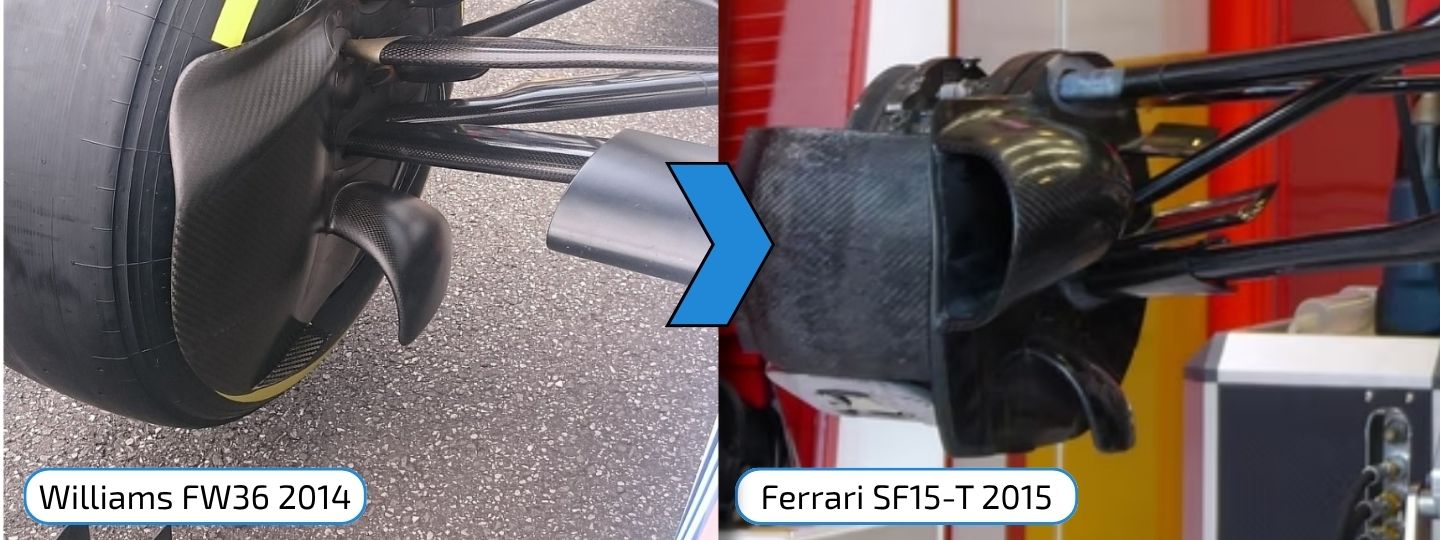
Front Brake Duct Wings
Developed originally in 2014 to reduce the contact patch loss and manage the wheelwake across diferent yaw and steer angles trying to get self loading techniques to increase and reduce the vorticity and reduce sensitivities
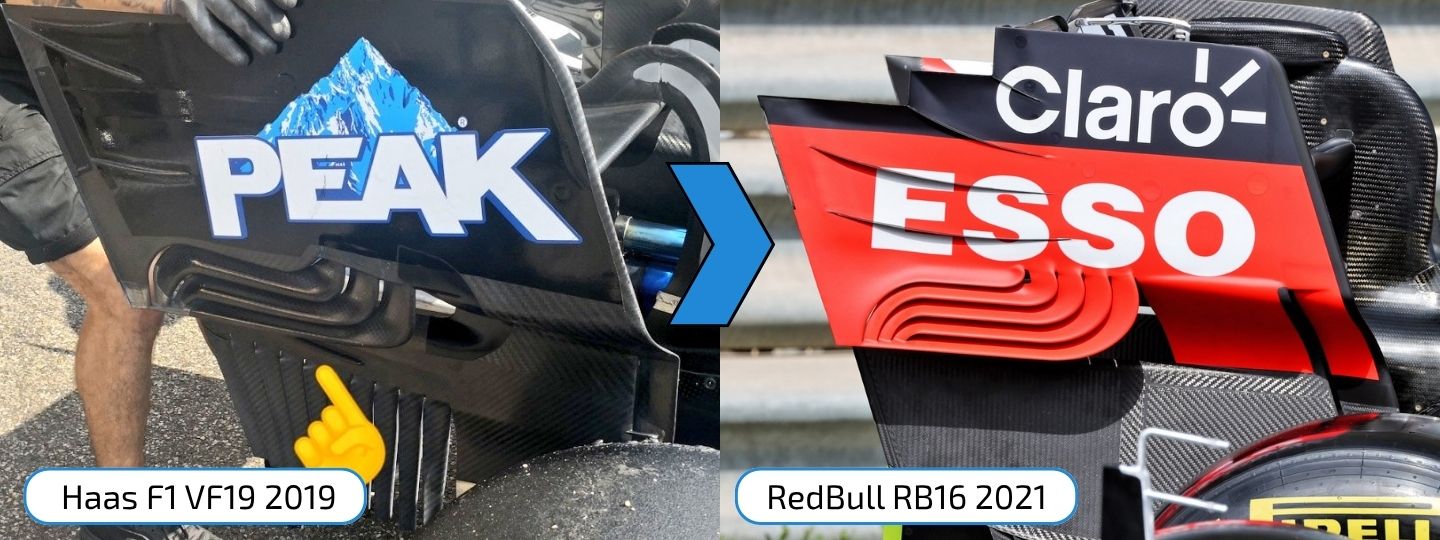
Rear Wing Chicane
Reducing yaw sensitivity by creating more local downforce upwash in the windward side reducing the Rear Wing stall. Additionally helping with the flow extraction from the Rear Brake duct wings enhancing diffuser downforce.
The approach is always grounded in one principle: aerodynamic work only matters if it leads to real, reliable performance improvements.
Who this is for
This service is designed for organisations that need serious aerodynamic input without unnecessary complexity.
- Motorsport teams and suppliers
- High-performance vehicle projects
- Engineering companies working on airflow, efficiency, or stability
- Startups and small to medium-sized businesses developing technical products
- Teams that need senior aerodynamic input without hiring full-time
Typical areas of support
- Aerodynamic concept development
- External flow analysis and performance assessment
- Design review and technical feedback
- Development direction and prioritisation
- Correlation thinking between simulation and real-world behaviour
- Performance-focused aerodynamic strategy
Let’s discuss your project
If you are working on a project where aerodynamic performance matters and want clear, reliable technical input, I’d be happy to hear more.
We can start with a simple conversation to understand your needs and see where I can add value.